Overview: HVAC Contractors
You call a heating and cooling company when the furnace quits in a cold snap, when the air conditioner runs all afternoon and the house still feels warm, or when the system that came with the house is finally finished. The work covers furnaces, heat pumps, air conditioners, ductwork, thermostats and the refrigerant lines between the outdoor unit and the indoor coil.
A careful company sizes equipment from a load calculation on your actual house, not from the label on the old unit. Oversized cooling runs briefly, shuts off before it has dried the air, and wears itself out early. Good crews also measure duct pressure, seal what leaks, and commission the system before they leave.
Ask what the quote includes: the permit, the electrical work, a new line set or a flush of the old one, the condensate route, and who registers the manufacturer warranty. Ask what a callback costs in the first season. Listings show what each company states on its own website about its license, the brands it carries and its hours.
Schedule maintenance before the season turns. Use the state and city lists below to reach the crews that cover your address.
Cost of heating and air conditioning services
Keep diagnostic fees, repair totals, and installed replacement systems separate. Equipment capacity, efficiency, ductwork, and electrical scope must match before two replacement quotes are comparable.
| Service or scope | Planning range | What this covers |
|---|---|---|
| Diagnostic visit | $75–$200per system diagnosis | Diagnose one residential heating or cooling system during regular business hours.Ask whether the diagnosis is credited toward an approved repair; after-hours service and additional systems cost more.Included scope and possible extrasScope used for this estimate: Site visit; Fault diagnosis Outside this estimate: Repair parts; Repair labor |
| Seasonal maintenance | $125–$225per system per maintenance visit | One scheduled cooling-system maintenance visit using a specified checklist.Compare coil cleaning, filter supply and refrigerant testing explicitly; repairs and replacement parts are separate.Included scope and possible extrasScope used for this estimate: Scheduled inspection; Listed routine maintenance Outside this estimate: Repair parts; Additional systems |
| AC capacitor replacement | $100–$400per completed capacitor repair | Replace one specified failed capacitor on an accessible residential AC unit after diagnosis.Confirm the diagnosis and whether the quoted total also includes the service-call charge.Included scope and possible extrasScope used for this estimate: Specified capacitor; Ordinary replacement labor Outside this estimate: Separate diagnostic fee unless credited; Other failed components; After-hours surcharge |
| Central AC replacement | $3,000–$15,000per complete 3-ton AC replacement | Installed 3-ton central cooling replacement with usable existing ducts; specify included indoor coil and outdoor equipment.This broad equipment-and-installation budget needs a matched equipment list. Duct replacement, major electrical work and difficult access can add cost.Included scope and possible extrasScope used for this estimate: Specified indoor and outdoor components; Installation and commissioning Outside this estimate: Duct replacement; Major electrical changes; Unlisted permits or disposal |
| Gas furnace replacement | $3,800–$12,000per specified furnace replacement | Replace one residential gas furnace with suitable existing ducts and gas service; specify heating output and AFUE.Venting changes, electrical upgrades, duct repairs and thermostat can sit outside the equipment package. Show any eligible incentive separately.Included scope and possible extrasScope used for this estimate: Specified furnace; Installation and startup Outside this estimate: Gas-service upgrades; Duct replacement |
| Ducted heat-pump system replacement | $7,000–$12,000per complete 3-ton replacement system | Replace a standard-efficiency 3-ton split heat pump and its matched indoor air handler, reusing suitable existing ducts and electrical capacity.This heats and cools with one matched system. Confirm both units, backup-heat capacity, controls, permits and removal; a condenser-only price is a smaller purchase.Included scope and possible extrasScope used for this estimate: Specified outdoor heat pump and matching indoor air handler; Ordinary installation and commissioning Outside this estimate: New or substantially rebuilt ductwork; Major electrical service changes; Premium cold-climate equipment or a system redesign; Permit or removal charges not included in the written quote; New refrigerant line set or difficult attic access unless itemized |
What changes the price
- System sizing, efficiency, and heating or cooling configuration.
- Duct condition, refrigerant-line work, and electrical capacity.
- Access, removal of old equipment, and the warranty or maintenance package.
Ask before you book
- Was replacement capacity based on a load calculation for my home?Equipment size alone is not a reliable comparison basis.
- Are ducts, electrical work, permits, and disposal itemized?Compare the completed installation, including required supporting work.
- Is the diagnostic charge credited toward the quoted repair?Avoid counting a credited visit fee twice.
Check the scope
A low equipment-only price does not describe an installed system. Keep rebates, financing costs, and any tax benefits outside the base price until eligibility is verified.
Compare quotes wisely
Request matched repair and replacement scopes, and compare cash price with the full financed cost.
How to read these estimates
These ranges combine published U.S. prices and cost guidance for the stated work. They are budgeting estimates, not offers from listed companies or a statistical national average. Confirm the total, included work and additional charges in writing.
U.S. planning estimates. Local quotes vary by location and the scope of work.
Frequently asked questions
What does an HVAC company actually cover?
Furnaces, heat pumps, air conditioners, ductwork, thermostats and controls, plus the refrigerant lines and condensate drains that go with them. Some outfits also take on boilers, water heaters and gas piping; others leave that to plumbers. Sheet metal work for a full duct replacement is its own skill, so ask whether the crew does it in house or subs it out.
How should a company size a new system?
By calculating the heat your house gains and loses: its size, insulation, windows, orientation and how leaky it is. Matching the old unit carries forward whatever mistake was made last time. Oversized cooling cools fast, shuts off before it has pulled the humidity out, and cycles itself into an early grave. Ask to see the calculation.
What should a maintenance visit include?
Filters, blower and coil cleaning, refrigerant charge checked against the maker's target, temperature split across the coil, heat exchanger inspection, safety controls, a clear condensate drain and tight electrical connections. A filter change and a sticker on the side of the unit is not maintenance. Ask for the readings in writing so you can compare them next year.
What separates a solid install from a cheap one?
Ductwork, mostly. A new condenser bolted onto undersized or leaking ducts still gives you uneven rooms and high bills. Look for a company that measures static pressure, seals the joints it can reach, sets airflow to the equipment, and hands over a commissioning sheet with the readings on it. Ask whether the permit and inspection are in the price.
When should I replace instead of repair?
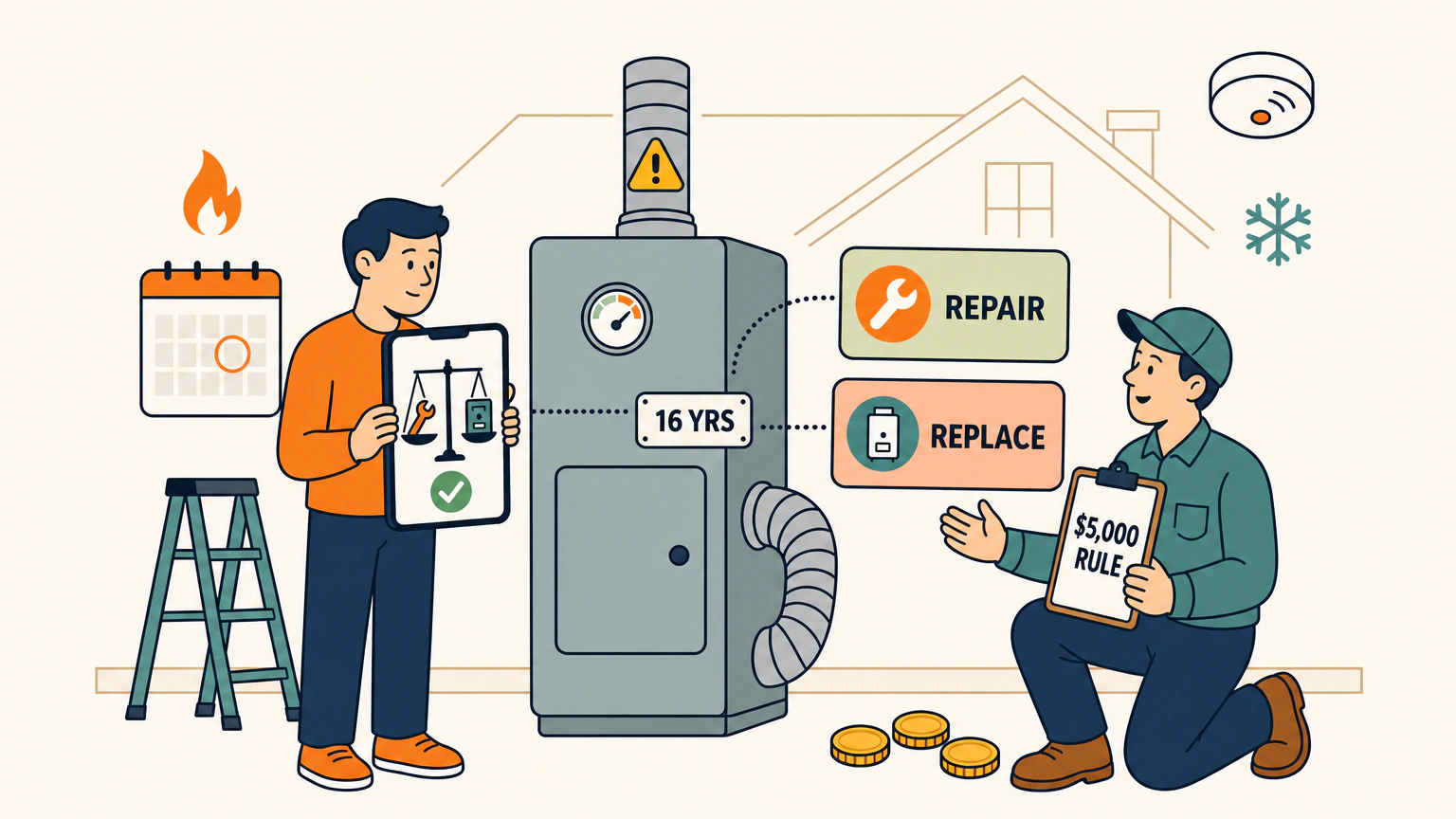
When the failed part is a major component on an aging system, when the same fault keeps returning, or when the refrigerant that unit uses is being phased out and getting scarce. A cracked heat exchanger ends the conversation: that gets replaced, not patched. Get a second opinion before you agree to a replacement quoted on the spot.