Overview: Insulation Contractors
Insulation is comfort and energy work rather than equipment work. Crews in this category add depth in the attic, insulate walls, treat the crawl space and the rim joist where the floor framing meets the foundation, and seal the air leaks that let conditioned air walk out of the house. The room that never holds temperature and the floor that is cold through socks are the usual reasons people call.
Air sealing comes before depth. Insulation slows heat; it does nothing to stop air moving. Piling more fiberglass over an attic full of open wall cavities, gaps around light fixtures and a bare hatch mostly buries the problem. A good crew seals the penetrations first, then insulates, and fits baffles so the vent path from the eaves stays open.
Ice dams are the same story told on the roof. Heat escaping into the attic melts snow, the water refreezes at the cold overhang, and it backs up under the shingles. Sealing and insulation fix that. Bigger gutters do not.
Listings show what each contractor states on its own website about materials and the work it takes on. Use the state and city lists below to find crews covering your area.
Cost of home insulation
Compare the insulated surface area, material, target R-value, and existing condition. Air sealing, removal, and moisture repairs should have explicit treatment in each quote.
| Service or scope | Planning range | What this covers |
|---|---|---|
| Blown-in attic insulation | $1–$4per sq. ft. of insulated attic floor | Install specified blown-in insulation on an accessible attic floor; existing insulation and the required added depth must be measured.A top-up and an empty attic use different quantities. Compare the same existing and target R-values; air sealing and removal should be separate line items.Included scope and possible extrasScope used for this estimate: Specified added insulation; Installation labor Outside this estimate: Air sealing; Old-insulation removal |
| Open-wall batt insulation | $0.80–$2.60per sq. ft. of insulated wall cavity area | Fit specified batts or rolls in accessible open wall cavities, with the material and target R-value stated.This does not include opening and repairing finished walls. Compare the specified material, facing and cavity depth.Included scope and possible extrasScope used for this estimate: Specified batts; Installation labor Outside this estimate: Drywall removal or replacement; Electrical alterations |
| Closed-cell spray foam | $1.30–$3.10per installed board foot | Install closed-cell foam in an accessible specified assembly, priced by its installed volume.Board feet = surface square feet × installed inches. Ask for thickness, product and required protective layers; the project minimum can dominate a small job.Included scope and possible extrasScope used for this estimate: Specified closed-cell foam; Ordinary application labor Outside this estimate: Removal of existing insulation; Moisture or structural repair; Required protective coatings unless listed; Difficult-access charges |
| Insulation removal | $1–$2.50per sq. ft. of attic floor cleared | Remove and dispose of dry, ordinary existing attic insulation with normal access.Rodent contamination, moisture damage, asbestos-containing material or difficult access require a separate assessed scope.Included scope and possible extrasScope used for this estimate: Removal labor; Specified disposal Outside this estimate: Hazardous-material work; Pest or moisture remediation |
What changes the price
- Insulated area, material, installed thickness, and specified R-value.
- Access, existing insulation, and concealed moisture or pest damage.
- Air sealing, ventilation details, and required assembly layers.
Ask before you book
- What existing and final R-values does the quote assume?A top-up and a full new installation need different quantities.
- Are air sealing, removal, and assembly protection layers included?Compare the complete intended assembly.
- How will hidden moisture or contamination change the work and price?These conditions need their own approved scope.
Check the scope
A square-foot price needs a named material, installed depth or R-value, and preparation scope. Compare gross installed costs before any separately verified incentives.
Compare quotes wisely
Compare quotes for the same target assembly and ask whether air sealing can be coordinated with insulation work.
How to read these estimates
These ranges combine published U.S. prices and cost guidance for the stated work. They are budgeting estimates, not offers from listed companies or a statistical national average. Confirm the total, included work and additional charges in writing.
U.S. planning estimates. Local quotes vary by location and the scope of work.
Frequently asked questions
Which part of the house should come first?
The attic, nearly always. Heat rises, the surface is easy to reach, and that is where the gaps are. After that comes the rim joist and crawl space, a small area that leaks out of proportion to its size. Walls come last, because opening them up gives the least improvement for the most disruption unless the siding is coming off anyway.
What is air sealing and why does it matter?
Closing the holes air actually moves through: the tops of interior walls, chimney chases, plumbing stacks, wiring penetrations, recessed light housings and the attic hatch. Fiberglass laid over an open hole does not stop the draft. Some contractors will run a blower door test to find leaks and show you the result, which turns a guess into a list of places to caulk and foam.
Spray foam, fiberglass or cellulose?
Fiberglass batts work when they fill the cavity with no gaps and nothing compressing them. Blown cellulose flows around wiring and odd framing, which makes it forgiving in an attic. Closed cell spray foam adds structure and an air barrier in one pass and is unforgiving about damp or dirty surfaces. Match the material to the space rather than to the sales pitch.
Can insulation cause damp or mold?
It can, when it traps warm moist air against something cold or blocks a vent path. That is why soffit to ridge airflow is protected with baffles, why bath fans vent outdoors instead of into the attic, and why a crawl space usually gets a ground vapor barrier. A crew that explains the moisture plan before naming a material is the one worth hiring.
How do I know the work was done properly?
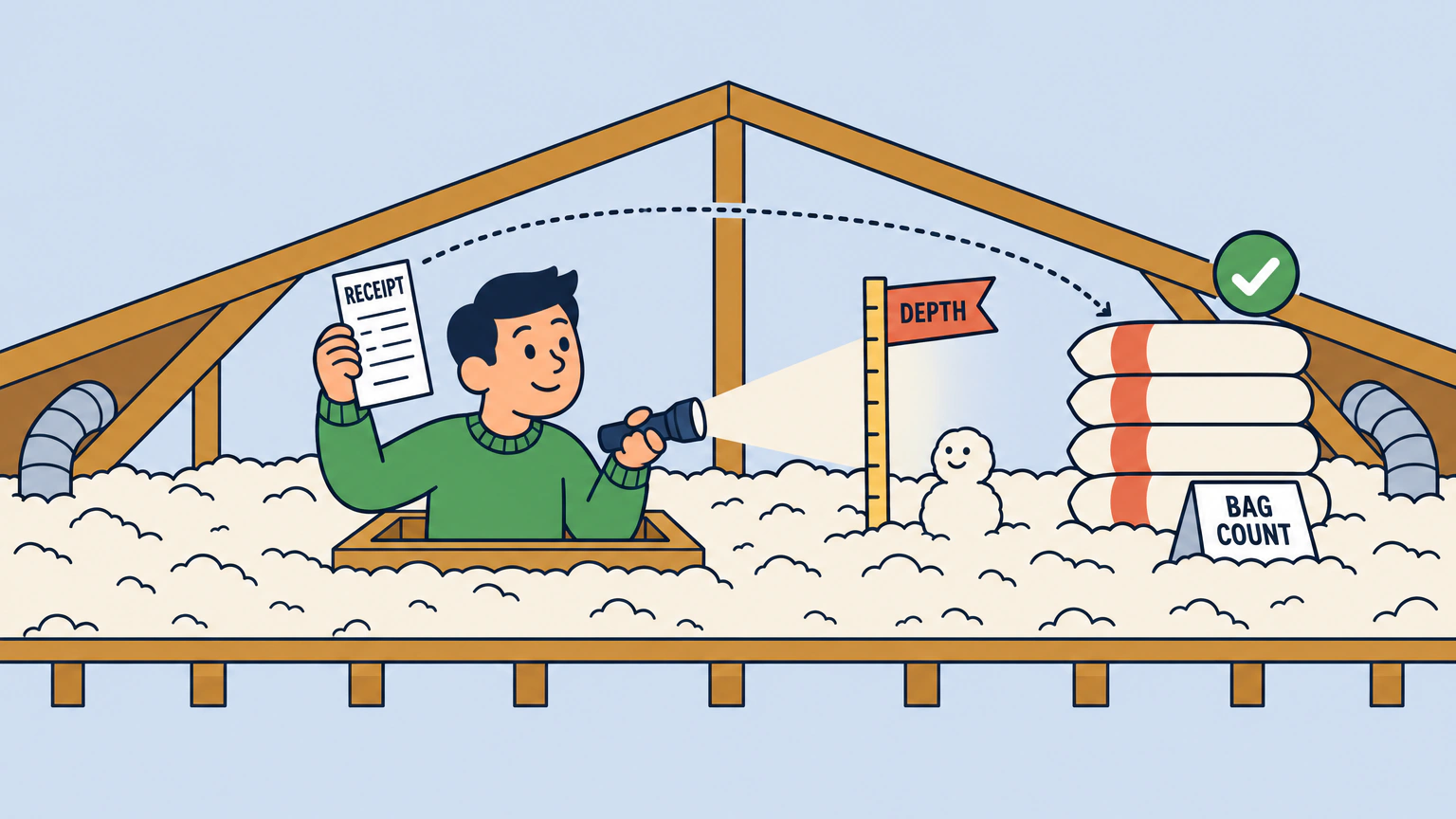
Even coverage with no bare stripes over the exterior walls, depth markers left in place, baffles at the eaves, a weatherstripped and insulated hatch, and recessed fixtures either rated for contact or boxed off. Ask for photographs before and after, since an attic is somewhere you will not look again for years.